
Windshield Crack Repair: Types, Process & When Replacement Is Needed

Your windshield carries more structural weight than most drivers realize — and a crack, left unattended, erodes that safety margin faster than Houston traffic wears down your patience. This guide breaks down exactly what happens when glass fractures, which cracks can be saved, and what the repair process actually involves.
30%
Cabin rigidity in rollovers
24–48h
Action window before the crack spreads

6 in
Max repairable crack length
Why Your Windshield’s Integrity Matters More Than You Think
Modern windshields aren’t just glass — they’re structural components engineered into your vehicle’s safety architecture. In a rollover, the windshield provides roughly 30% of cabin rigidity, keeping the roof from collapsing inward. During a frontal collision, it acts as the backstop that allows front passenger airbags to deploy at the correct angle. Compromise the glass, and you compromise both systems simultaneously.
A crack doesn’t have to be dramatic to be dangerous. Even a modest fracture alters how stress distributes across the laminated surface. As that crack spreads — and in Houston’s climate, it will spread — the structural margin narrows in ways that aren’t always visible until it’s too late.
Understanding what type of crack you’re dealing with, and whether it can be repaired rather than replaced, is the difference between a $100 fix and a $500 bill.
Cracks vs. Chips
Two Different Injuries, Two Different Repairs
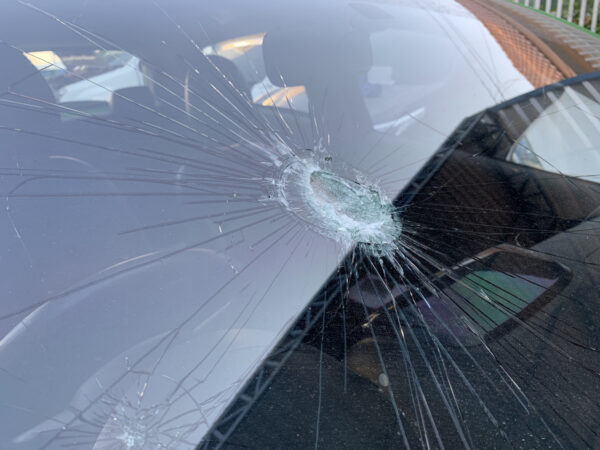
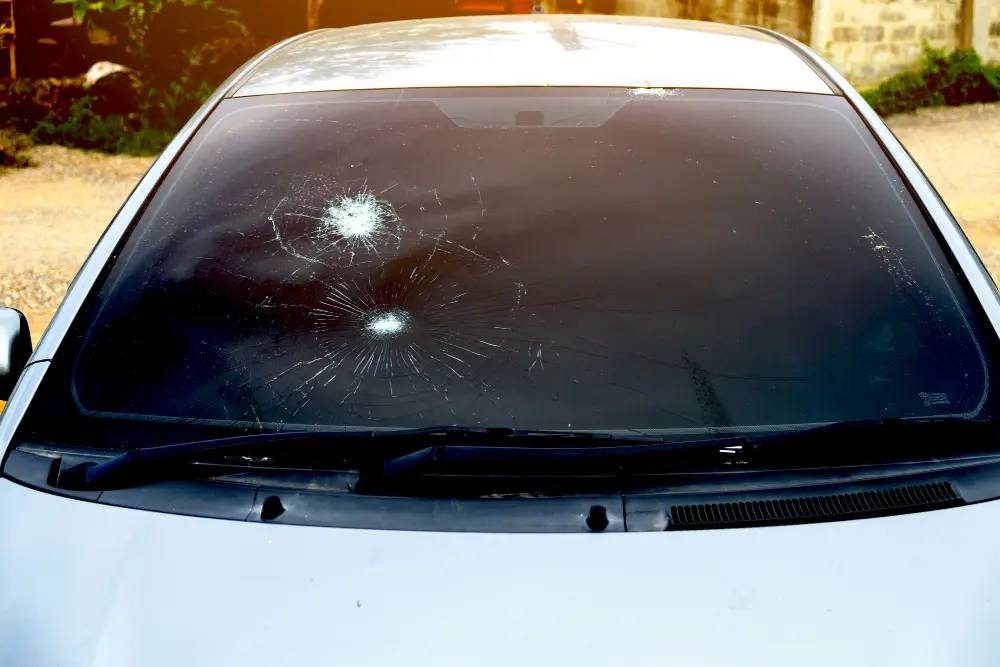
People use “chip” and “crack” interchangeably, but they describe entirely different types of glass damage — and the repair methods are equally different.
A chip is a point-of-impact injury: a localized divot where rock or road debris struck the surface. The damage is contained, roughly circular, and treated with single-point resin injection. For a detailed breakdown of that process, see our guide on windshield chip repair.
A crack is a linear fracture that extends the glass surface; sometimes from an impact, sometimes appearing without any visible hit at all. Repairing a crack requires running a bridge resin tool along the entire fracture line in overlapping segments, with stop-holes drilled at endpoints for cracks longer than three inches. Most cracks can only be repaired if under six inches and not at the windshield’s edge.
The key technical difference: chip repair injects resin into a single contained point. Crack repair works resin progressively along a fracture line, requiring vacuum pressure and UV curing in sections — a more demanding process with a narrower margin for success.
The Five Types of Windshield Cracks
and Whether They Can Be Repaired
Not all cracks are created equal. The type, location, and origin of a fracture each affect whether a technician can repair it or whether you’re looking at a full replacement.
Often Repairable
Stress Crack
Appears without impact, caused by extreme temperature differentials. Houston’s summer heat, followed by AC, creates exactly these conditions. Starts at the edge, spreads inward. Repairable if caught early and not yet at the perimeter.
Almost Always Replacement
Edge Crack
Within two inches of the windshield perimeter. The most structurally dangerous variety compromises the seal and bonding zone. Almost universally requires full windshield replacement.
Repairable Under 6"
Floater Crack
Originates in the center of the windshield, far from the edges. The most repair-friendly type. Under six inches and not in the driver’s sightline or ADAS camera zone, a technician can typically achieve good results.
Depends on Length
Combination Crack
Starts as a chip but extends outward into a crack. Repairability depends on the total length from the impact point. Under six inches and away from any edge, repair is often viable.
Often Replacement
Pressure Crack
Caused by mechanical pressure, such as a heavy load on the hood, car wash brush, or atmospheric changes. Produces clean, long lines that often exceed repairable limits and are difficult to stabilize with resin alone.
Why Cracks Spread
and Why 24–48 Hours Is Your Action Window
Windshield glass is laminated: two layers of tempered glass with a PVB (polyvinyl butyral) interlayer bonded between them. This sandwich structure prevents shattering on impact — but once the outer layer fractures, stress redistributes across the entire surface with every force applied to the glass.
Three forces work together to extend cracks:
- Road vibration from potholes creates micro-flexion
- Thermal expansion and contraction generate tension along the fracture line with every temperature cycle
- Structural flexion from the vehicle frame torquing over uneven ground adds another layer of mechanical stress
In Houston, this is especially aggressive. A windshield absorbing mid-summer sun on I-10 can reach 140°F. Drive into a 68°F garage, and the glass contracts sharply. A two-inch floater crack repairable on Monday can become a twelve-inch edge crack by the weekend.
How Professional Windshield Crack Repair Actually Works
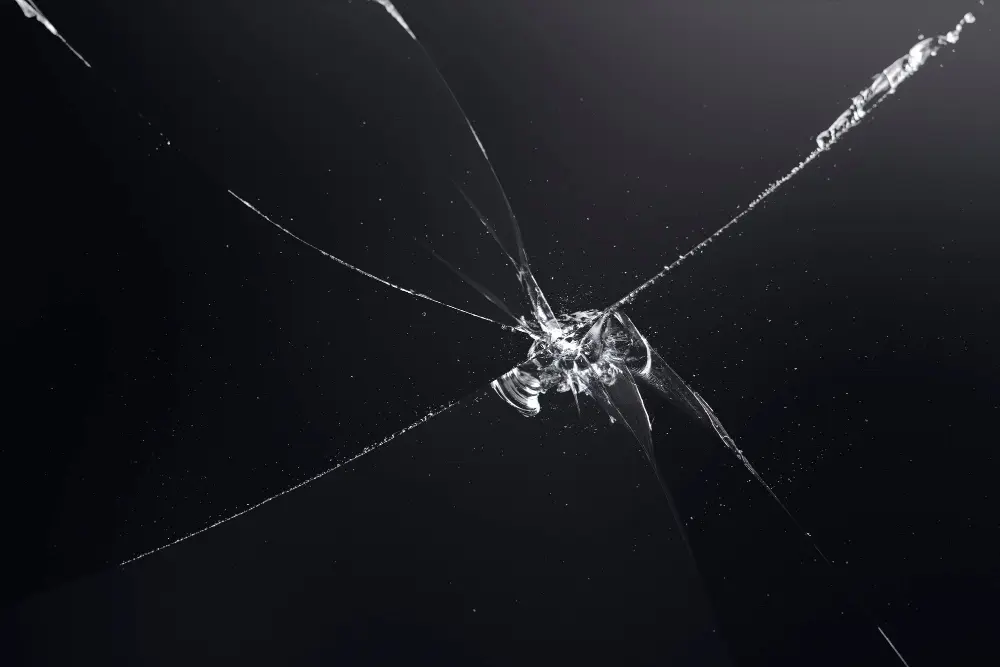
The repair process for a crack is considerably more involved than it looks from the outside. Here’s what a qualified technician does, step by step.
1. Assessment and Measurement
Before any tools touch the glass, the technician measures the crack’s length, traces its path relative to the driver’s primary sightline, and notes its proximity to the windshield edge. For vehicles with ADAS, the camera sensor zone near the rearview mirror mount is also evaluated. A crack intersecting that zone may require ADAS recalibration after repair, or may indicate replacement is the safer path.
2.Crack Stabilization and Stop-Drilling
For cracks longer than three inches, the technician drills small stop-holes at each endpoint using diamond-tipped bits. This disrupts the stress concentration at the crack tip, preventing the fracture from advancing further while resin is worked along the body of the crack. The holes are precisely sized to create the smallest possible opening without further weakening the glass.
3. Resin Injection Along the Fracture
A bridge tool is mounted over the crack and moved in overlapping segments along its length. At each position, the tool creates a vacuum to draw air and moisture out, then switches to positive pressure to force optical resin into the void. The resin is formulated with a refractive index of approximately 1.52, matching the surrounding glass, so light passes through without visible distortion. Sections overlap to ensure continuous coverage along the full fracture line.


4. UV Curing and Finishing
Each section of injected resin is cured individually under UV light, triggering the polymerization that hardens the resin and bonds it to the glass. Excess cured resin is scraped from the surface, and the area is polished. A well-executed repair restores between 80 and 95% of original optical clarity. The fracture line may remain faintly visible under certain lighting — an honest tradeoff compared to a crack that continues to spread.
When a Crack Means You Need a Full Replacement
Repair isn’t always possible, and attempting it on a crack that exceeds repair parameters can give a false sense of security without restoring the windshield’s structural integrity. The following conditions indicate that full windshield replacement is the correct path:
❌ The crack exceeds six inches in total length
❌ The crack is within two inches of the windshield edge (edge crack)
❌ Multiple cracks intersect, creating a web or star pattern
❌ The fracture has penetrated through both layers to the PVB interlayer
❌ The crack falls within the driver’s critical sightline, creating distortion
❌ The damage intersects the ADAS camera sensor zone
When in doubt, a professional assessment takes the guesswork out of the decision. A technician can confirm within minutes whether the damage is within repair parameters.
Frequently Asked Questions (FAQs) About Chip Repair
Can a long crack be repaired, or is replacement always required?
The industry-standard repairability limit for cracks is six inches. A crack under that threshold, located away from the windshield edge and not intersecting the driver’s critical sightline, can typically be treated with professional resin injection. Beyond six inches, or in proximity to the edge, the structural and optical integrity of a repair becomes unreliable, making replacement the appropriate solution at that point.
Why did my windshield crack without being hit by anything?
What you’re most likely experiencing is a stress crack, a fracture caused by thermal expansion and contraction rather than physical impact. Glass expands in heat and contracts in cold, and when those changes happen rapidly (Houston afternoon sun to air-conditioned parking garage), the tension can exceed the material’s flexibility. These cracks typically start at the windshield edge, where stress concentrates, and spread inward.
Does putting tape or nail polish over a crack stop it from spreading?
These are temporary measures at best, and they can complicate professional repair. Tape keeps debris and moisture out of the crack, which is marginally helpful, but it provides zero structural resistance to the thermal and mechanical forces that cause cracks to extend. Nail polish introduces a foreign substance into the fracture that can interfere with resin adhesion if you later seek professional repair. Neither approach addresses the underlying fracture.
Will a repaired crack pass Texas vehicle inspection?
Yes, in most cases. Texas inspection criteria for windshields focus on whether damage creates a distortion or obstruction in the driver’s normal line of vision — not on whether a repair is visible. A professionally repaired crack that doesn’t cause optical distortion within the critical viewing zone (roughly 8.5″ × 11″ in front of the driver) will pass inspection. If the repair does create visible distortion in that zone, inspection may require replacement before the vehicle can be certified.
How is crack repair technically different from chip repair?
Chip repair injects resin into a single confined point using a stationary injector mounted over the impact site. Crack repair requires a bridge tool that traverses the entire fracture length in overlapping passes, alternating vacuum and pressure cycles to work resin progressively along the line. For cracks exceeding three inches, stop-drilling at the endpoints is required before injection begins. The process takes significantly longer and demands greater precision to achieve consistent optical clarity along the full fracture path.
Cracks Don’t Wait. Neither Should You.
Get a free crack assessment from A Plus Auto Glass and same-day service across Greater Houston. We’ll tell you honestly whether repair or replacement is the right call.