
Windshield Replacement: What to Know Before, During & After
Glass grade, adhesive chemistry, installation precision, and ADAS recalibration all determine whether your replacement meets the safety standards your vehicle was engineered to deliver — or merely looks like it does.
When Repair Ends, and Replacement Begins
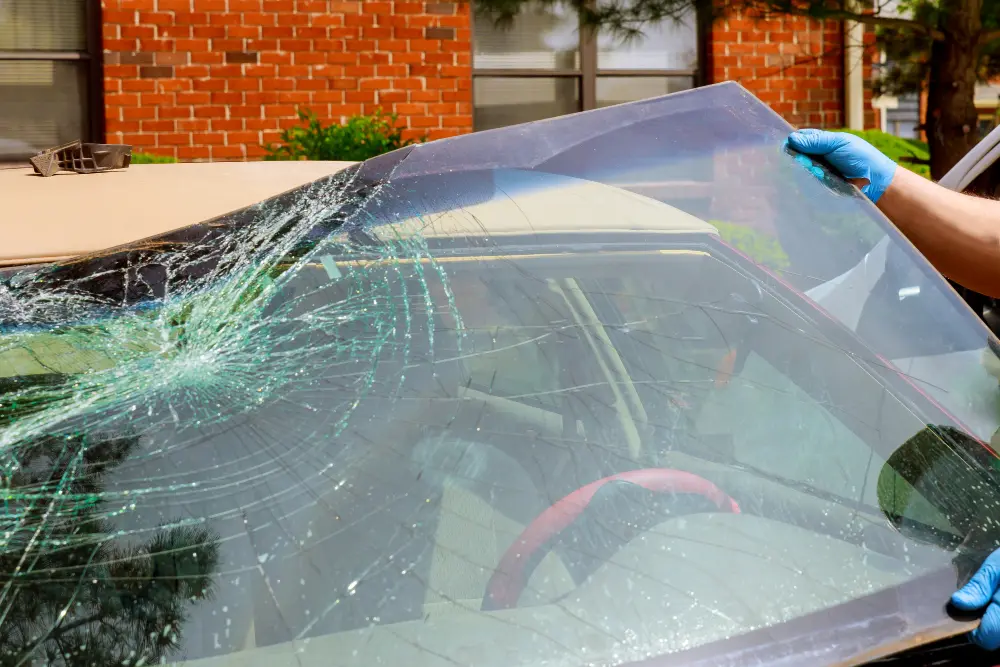
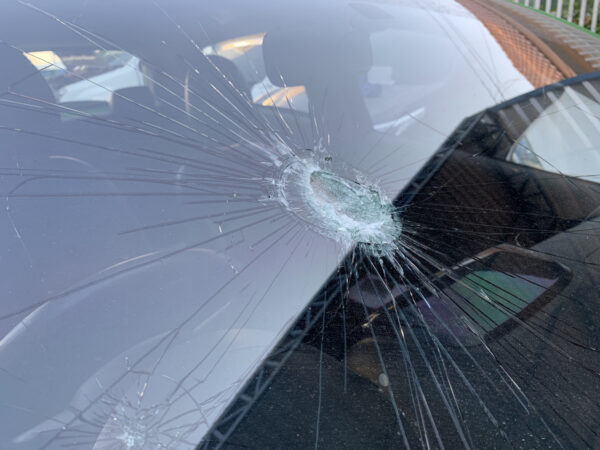
Not every windshield can be saved. Once a crack exceeds six inches, reaches within two inches of the edge, penetrates both glass layers, or spreads into a web pattern, resin repair no longer restores structural integrity; rather, it creates a false sense of security in a component that your airbags and roof both depend on.
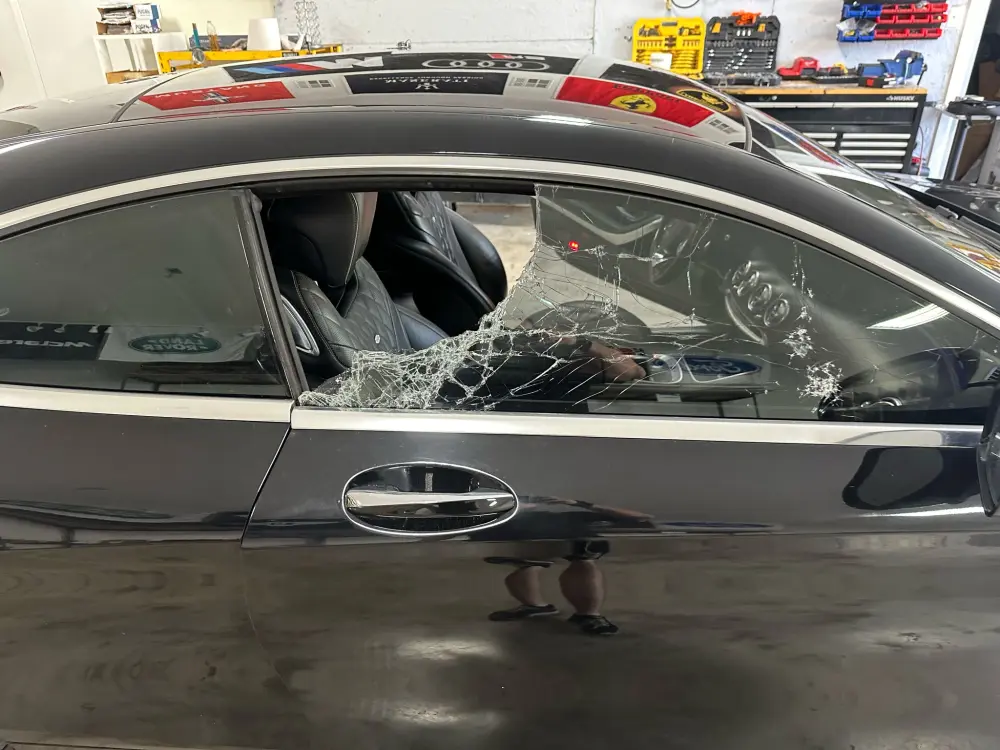
Replacement is also the only option after a significant impact that shatters or deeply pits the glass, after a rollover that compromises the bonding seal, or when existing glass was incorrectly installed, and the adhesive bond is suspect. If you’re still unsure whether your damage qualifies for repair, our guides on windshield crack repair and windshield chip repair walk through repairability criteria in full.
What matters here is understanding that not all replacements produce the same outcome. Glass grade, adhesive chemistry, installation technique, cure time management, and ADAS recalibration are the variables that separate a replacement that restores factory safety specs from one that technically fills the frame while leaving you with degraded visibility, compromised sensors, or a bond that won’t hold in the moment it’s needed most.
OEM/ OEE
45–75 MIN
1–8 HRS
OEM vs. Aftermarket Glass
What the Tiers Actually Mean
For truck-specific windshield replacement (pickups, semis, fleet),
see our truck windshield page.
Three tiers of windshield glass exist in the replacement market. The choice between them isn’t purely a cost question — it determines optical clarity, structural fit, ADAS sensor compatibility, and how your vehicle responds in a crash. A Plus Auto Glass stocks and installs OEM and OEE glass; here’s what each tier involves.
|
Glass Tier |
What It Is |
ADAS Safe |
APlus Uses |
|
OEM Best for ADAS |
Produced by the same manufacturer as your factory glass. Matches original thickness tolerances, curvature, tint coatings, and the optical zone that the ADAS camera looks through. No compromises in specification. |
✓ Yes |
✓ Yes |
|
OEE Recommended Value |
Made by the same OEM suppliers but sold through aftermarket channels. Identical manufacturing standards and optical specs to OEM, without the brand markup. Optimal value for most ADAS vehicles — what we recommend for the majority of replacements. |
✓ Yes |
✓ Yes |
|
AFTERMARKET ADAS Risk |
Third-party glass produced outside the OEM supply chain. Quality varies by brand. Some perform adequately for older non-ADAS vehicles; others introduce subtle optical distortions that interfere with camera calibration — causing safety systems to operate on skewed data with no visible error indication. |
✗ Risk |
Only for non-ADAS models |
For any vehicle built after 2016 with lane-keeping assist, automatic emergency braking, or adaptive cruise control: OEM or OEE glass is not optional. The camera looks through the glass — its manufacturing precision determines how accurately the camera sees the road.
The Replacement Process
Seven Steps to a Factory-Spec Installation
A windshield replacement looks straightforward from the outside. The complexity lives in the details, such as the condition of the pinch weld, the adhesive bed left behind, the cure chemistry of the urethane, and the millimeter precision required for ADAS cameras to function after the glass is set. Here’s each stage and why it matters.
1. Pre-Installation Inspection
Before any glass moves, the technician inspects the pinch weld — the metal flange that the windshield adhesive bonds to. Surface rust, old adhesive buildup, or physical damage to the flange can compromise the new bond. Rust is treated and neutralized before installation proceeds. This step is what separates a professional replacement from a quick swap that bonds to a compromised surface.
2. Safe Removal
The existing glass is removed by cutting through the urethane bead using a cold knife, piano wire, or oscillating tool. The method is chosen based on frame geometry and adhesive age. The critical concern is protecting any ADAS hardware mounted to the glass interior. Camera brackets, rain sensors, and lane-departure modules are carefully detached before the glass is lifted. Rushing this step risks breaking sensor mounts that are expensive to replace independently.
3. Pinch Weld Preparation and Priming
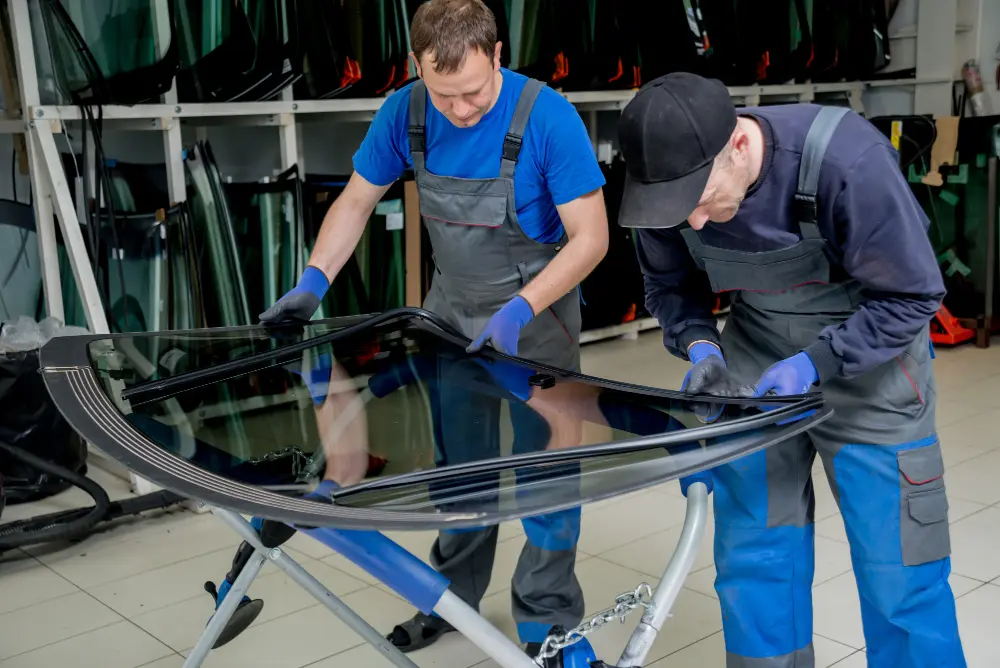
A common installation error is stripping the pinch weld completely before applying fresh urethane. In practice, leaving a 1–2mm bed of existing cured adhesive provides a better bonding surface than bare metal. The old bead is trimmed to this depth, metal primer is applied to any bare frame sections, and glass primer is applied to the new windshield’s bonding perimeter. Proper priming directly affects bond strength and cure speed.
4. Adhesive Application and Safe Drive-Away Time
A continuous bead of automotive urethane is applied around the pinch weld. Bead consistency matters — gaps or thin spots create leak points and weak zones. The adhesive grade determines SDAT: fast-cure formulations achieve structural integrity in approximately one hour; standard urethane requires 4–8 hours, depending on temperature and humidity. Houston’s heat can accelerate the cure, but the technician confirms SDAT against ambient conditions before releasing any vehicle.
5. Glass Installation and Precision Alignment
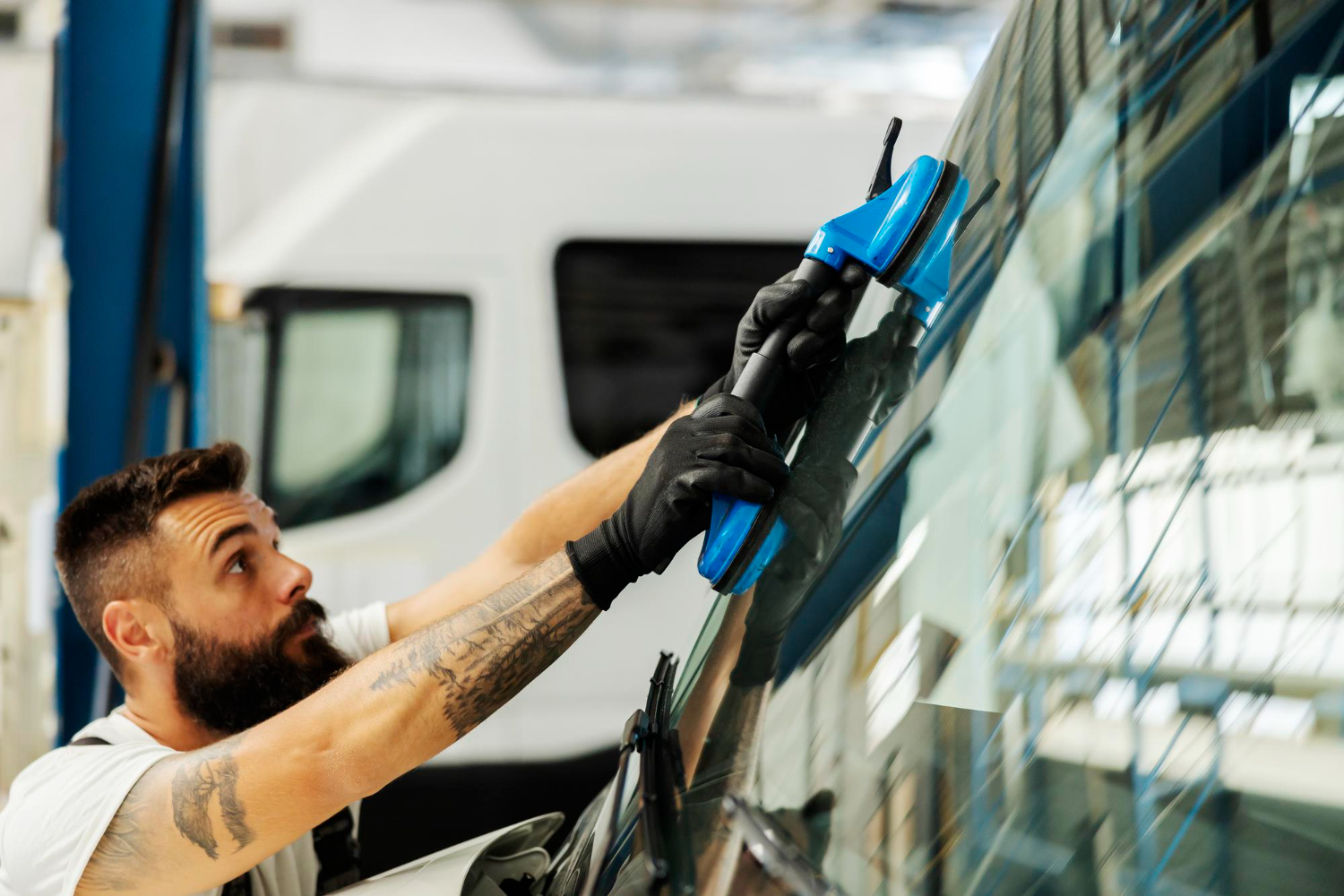
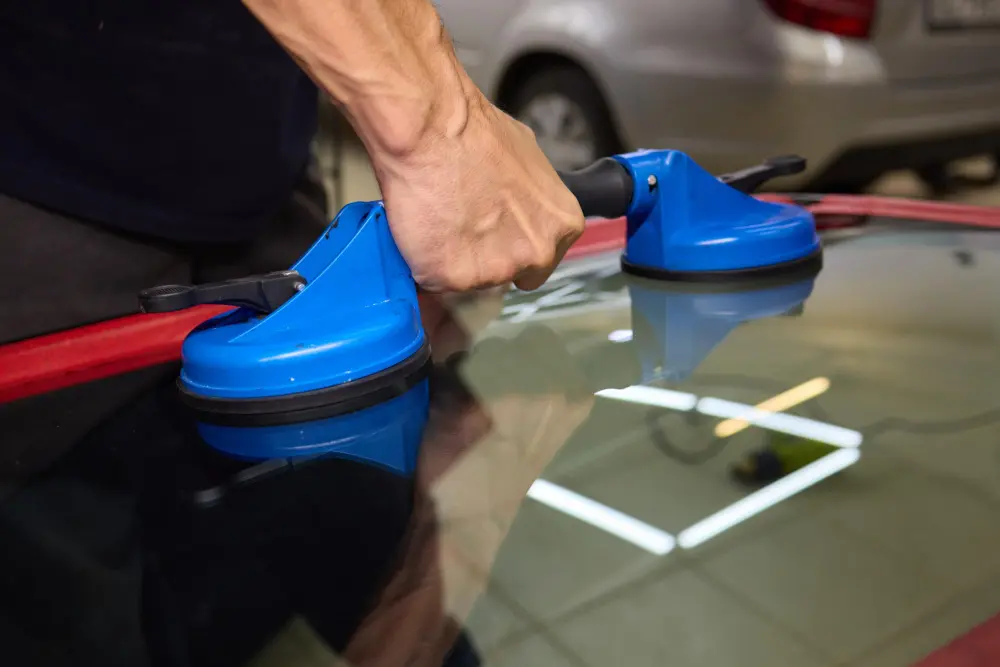
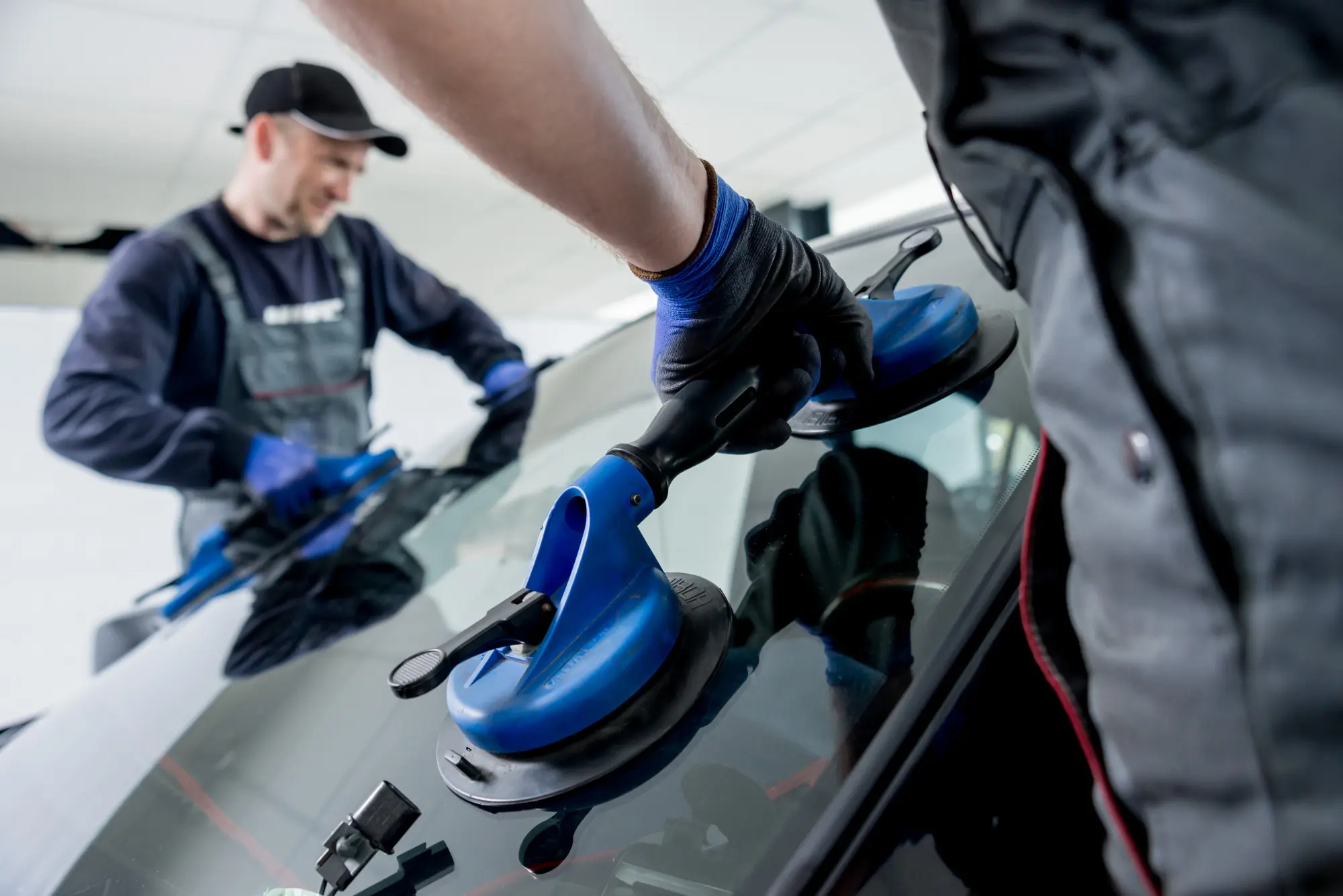
The new windshield is lifted into position using industrial suction cups. For ADAS-equipped vehicles, positioning is critical to within millimeters, whereby the forward-facing camera must sit in its mounting location relative to the glass surface for calibration to succeed. The glass is pressed down uniformly across the adhesive bead, and its position is confirmed before the urethane begins its cure cycle.
6. ADAS Recalibration
Every camera-equipped vehicle requires recalibration after replacement — no exceptions. New glass changes the optical path the camera looks through. Even OEM glass requires recalibration because the camera position relative to the glass shifts slightly during installation. Our technicians perform static and dynamic calibration in-house; the full process is covered in our windshield ADAS calibration guide.


7. Cure Verification and Final Inspection
Before the vehicle is released, the technician confirms SDAT against ambient conditions, runs a leak test to verify the perimeter seal, and reinstalls all trim, sensors, and mirror mounts. The customer receives specific aftercare instructions for the cure window. Releasing a vehicle before structural SDAT is reached is an installation failure, not a shortcut.
After Your Replacement
What to Do (and What to Avoid)
The adhesive is the most vulnerable variable after installation. Several common post-installation behaviors can compromise the bond before it reaches full strength.
Dos
Wait Out the Full SDAT
Fast-cure urethane achieves drive-away strength in one hour; standard formulations require 4–8 hours. These aren’t preferences; instead, they reflect the tensile strength needed to keep the windshield bonded in an airbag deployment. Driving early puts the bond and your safety at risk.
Leave Retention Tape 24 Hours
Retention tape holds the glass precisely aligned while the adhesive cures. Removing it early, even after SDAT, can allow micro-movement before the urethane has fully set around the full perimeter. Leave it exactly where the technician placed it.
Verify ADAS Features After Calibration
After recalibration, test each ADAS feature on a familiar road under normal conditions, including lane-departure warnings, automatic braking sensitivity, and adaptive cruise engagement. A calibrated system should behave identically to the way it did before replacement. Any unexpected behavior warrants a return visit.
Don’ts
Bang When Closing Doors
A car door slamming shut creates a pressure spike inside the cabin. In the first 24 hours, that pressure pushes outward against a windshield whose adhesive isn’t yet at full strength. An inch of open window allows pressure to equalize without stressing the new bond.
Visit A Car Wash for 48 Hours
Automated car washes subject the windshield to high-pressure water jets and physical brushes from multiple angles. Both create mechanical stress on a bonding seal that is still curing to full strength. A gentle garden hose rinse is acceptable after 24 hours; pressure or mechanical washing should wait the full 48 hours.
Reinstall the Mirror Mount Early
The rearview mirror mounts to an adhesive button on the interior glass surface. If repositioned during installation, that button needs its own 24-hour cure time before the mirror assembly is reattached. Reattaching early and loading the mirror can stress both the mount and the surrounding glass.
The Safety Standards Behind Every Installation
Two Federal Motor Vehicle Safety Standards define what a windshield replacement must structurally achieve. They’re not industry guidelines. Instead, these are legally required performance thresholds that only a correctly executed installation can meet.
Windshield Retention Standard
FMVSS 212
FMVSS 212 requires that the windshield remain substantially intact and bonded to the vehicle body during a crash, preventing occupant ejection and structural failure. This standard makes the adhesive bond legally material. A windshield bonded with incorrect urethane, applied to an unprepared pinch weld, will not meet FMVSS 212 in a real impact, regardless of glass grade. The installation determines compliance, not the glass alone.
Occupant Crash Protection
FMVSS 208
FMVSS 208 governs occupant protection, and windshields are directly involved because the passenger-side airbag deploys against the windshield interior at high pressure. The windshield acts as the backstop that redirects the airbag toward the occupant. A weak bond, an incorrectly seated perimeter, or under-cured urethane can cause the windshield to fail as an airbag backstop — undermining the entire front passenger protection system the moment it’s needed.
Frequently Asked Questions (FAQs)
How long does windshield replacement take?
Physical installation takes 45-75 minutes. Static ADAS calibration adds 30-60 minutes. Adhesive cure time is separate: fast-cure urethane allows drive-away in roughly one hour, standard formulations require 4-8 hours.
Is OEM glass worth the premium over aftermarket?
For vehicles with ADAS cameras (most 2016+), OEM or OEE glass is a technical requirement, not a premium option. The camera looks through the glass, and optical variations in aftermarket glass can cause safety systems to operate on skewed data. For older non-ADAS vehicles, quality aftermarket glass is a reasonable cost tradeoff.
Will replacing my windshield disable ADAS safety features?
Temporarily yes. ADAS cameras require recalibration after replacement. This is expected and necessary. A replacement without recalibration leaves safety systems technically active but potentially inaccurate.
What is the difference between mobile and in-shop replacement?
Glass installation quality is identical. The distinction is ADAS calibration: static calibration requires a level floor, measured distances, and controlled lighting that cannot be replicated in a driveway. If your vehicle needs static calibration (most Toyota, Subaru, Honda, BMW), the vehicle needs to be in-shop for that step.
Does insurance cover windshield replacement?
Most comprehensive auto insurance policies cover windshield replacement. Texas policies typically include glass coverage with zero or minimal deductible. We handle insurance paperwork directly and verify your coverage before work begins.
Certified Replacement.
Factory Standards.
Same Day.
A Plus Auto Glass provides OEM and OEE windshield replacement with manufacturer-spec adhesive and in-house ADAS recalibration. For repairable damage, see our crack repair and chip repair guides before committing to replacement.