Vehicle Wraps in Houston: Types, Costs, Durability & What to Expect
New colour. New finish. Same paint underneath — protected, not painted over.

5–7 yr
Cast vinyl lifespan
3–5 days
Full wrap install
100%
Reversible
AVAILABLE FINISHES

Gloss
Classic high-shine
Satin
Semi-gloss depth
Matte
Flat, premium look
Colour-Shift
Iridescent chameleon
Carbon Fibre
Woven texture
Brushed Metal
Directional grain
Chrome
Mirror-reflective
INTRODUCTION
What a Vehicle Wrap Is — and Isn’t
A vehicle wrap is a large-format vinyl graphic applied panel by panel over the original painted surface. It changes the vehicle’s visual appearance (its colour, finish, or both) without any permanent alteration to the paint underneath. When removed correctly, the factory finish is revealed in the same condition it was in when covered, typically better preserved than the exposed panels around it that were subjected to years of UV and abrasion.
That reversibility is what distinguishes wrapping from repainting as a surface-change method. A respray permanently alters the vehicle’s finish history, affects resale documentation, and requires matching factory paint codes precisely to avoid visible differences. A wrap does none of those things. It’s a replaceable, updatable, and removable surface layer — on a timeline that suits the owner rather than being permanent from day one.
Wraps also serve as a paint protection layer. The vinyl shields panels from UV fading, light abrasion, stone chips, and environmental contaminants for as long as it’s in place. When applied over quality paint and maintained correctly, the result after removal is often noticeably better paint than on the vehicle’s unexposed lower edges. For protection-only applications without a colour change, our paint protection film page covers that category separately.
1 — VINYL TECHNOLOGY
Cast vs Calendered: The Material Matters
Not all vinyl wrap film is manufactured the same way, and the production method determines whether the wrap will perform correctly on a vehicle’s compound curves, panel edges, and tight recesses. Understanding the difference is the starting point for evaluating any wrap job.
| Aspect | 01 | Cast Vinyl | 02 | Calendered Vinyl |
| How Made | Liquid PVC is poured onto a casting sheet and then baked. The process creates a film with no internal stress — the material holds its shape without trying to return to a previous state. | PVC is pressed through heavy rollers. The rolling process creates internal stress — the material has a tendency to shrink back toward its original shape over time, particularly at edges and curves. | ||
| Thickness | 2–3 mil — thin, highly conformable | 3–4 mil — thicker, stiffer, less conformable | ||
| Flexibility | Conforms to compound curves, door handles, bumper edges, and recessed areas without lifting or wrinkling | Performs on flat or gently curved surfaces. Prone to lifting, shrinking, or wrinkling on complex curves and tight panel edges | ||
| Lifespan | 7–10 years garaged · 5–7 years daily outdoor use | 3–5 years under normal conditions | ||
| Best For | Full colour-change wraps, complete vehicle coverage, any panel with curvature | Flat-panel commercial graphics, fleet decals, budget signage on box vans and trailers | ||
For full vehicle colour-change wraps, cast vinyl is the only appropriate choice. A Plus Auto Glass uses cast vinyl from 3M and Avery Dennison for all full and partial vehicle wraps. Calendered film is reserved for specific flat-surface commercial applications where the economics warrant it, and the material limitations are understood upfront.
02 — WRAP SCOPE
Full, Partial & Fleet Wraps
The scope of a wrap determines cost, installation time, and what the finished result looks like. Each option serves a different purpose, and the right choice depends on whether you’re making a complete visual transformation, adding an accent treatment, or branding a fleet of commercial vehicles.

Full Vehicle Wrap
Every exterior panel is covered — doors, hood, roof, trunk, bumpers, mirrors, and handles. The result is a complete colour or finish transformation with no original paint visible. Full wraps provide the maximum paint protection benefit across the entire vehicle surface.
Timeline: 3–5 business days
Partial Wrap
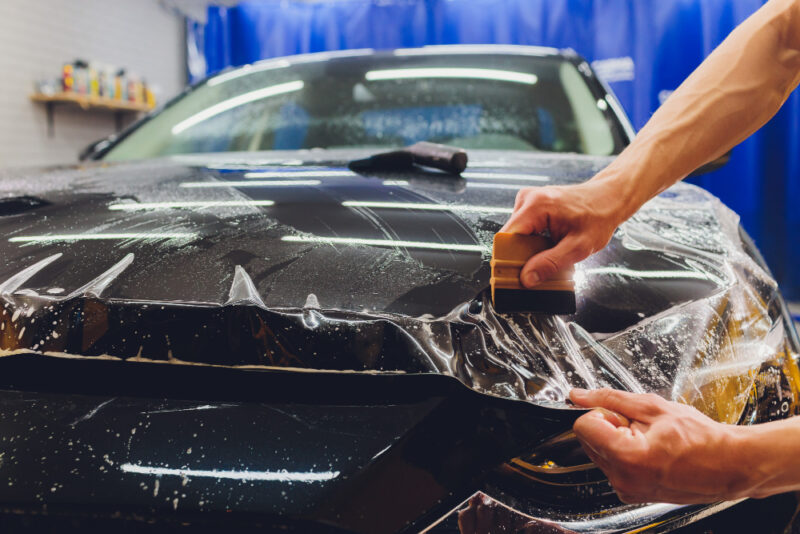
Selected panels or zones are wrapped. Typical choices include the hood, roof, trunk lid, or door sills. Partial wraps work well as contrasting accents, roof-colour treatments, or branding elements without full coverage. The wrap-to-paint transition line requires careful handling to avoid visible edge lifting over time.
Timeline: 1–2 days
Fleet Wrap
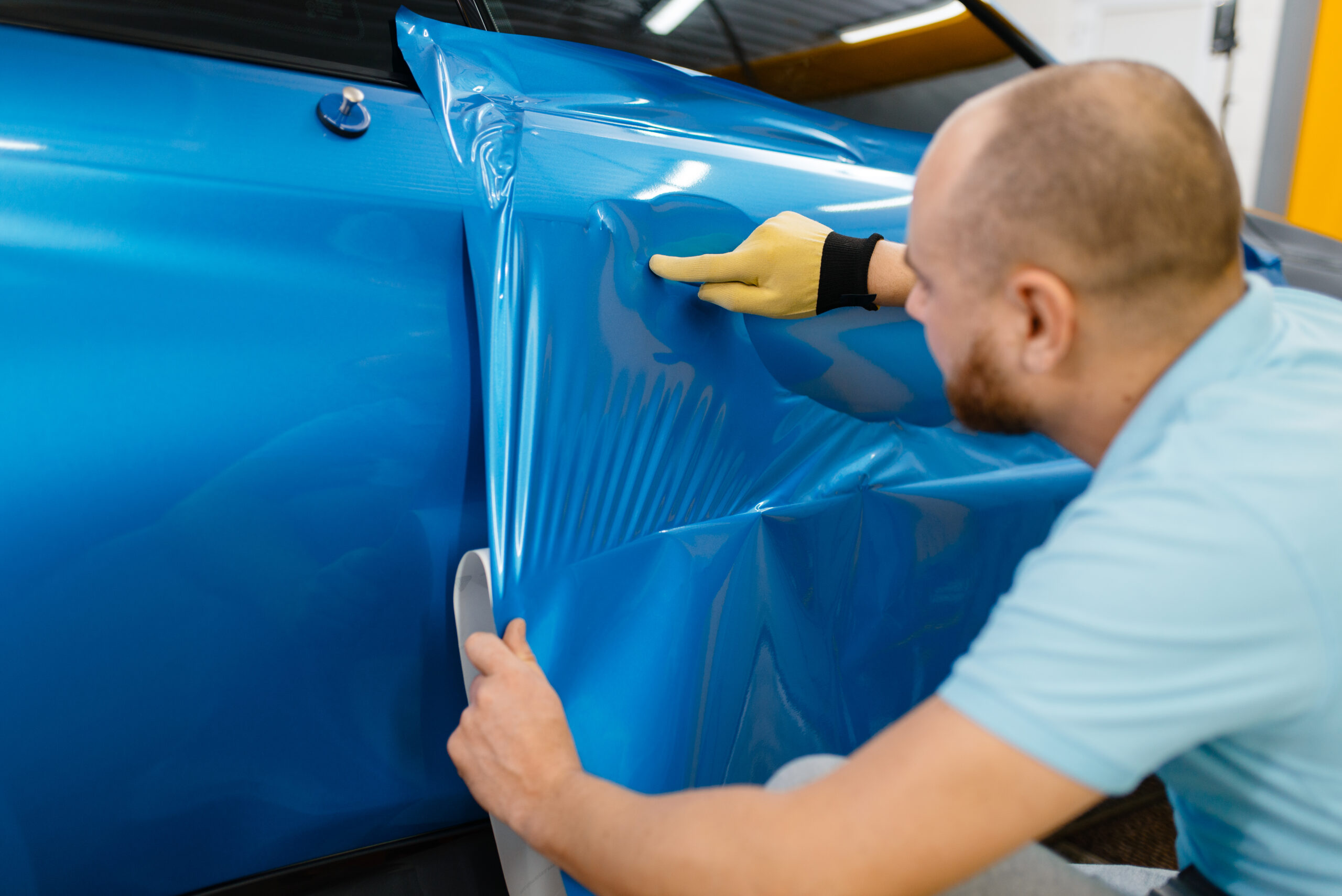
Standardised graphics and branding applied across multiple vehicles to a consistent design spec. Fleet wraps prioritise rapid installation and easy section replacement when branding is updated. This is a significant practical advantage over painted fleet liveries, which require full resprays to update.
Timeline: Per-vehicle scheduling
03 — COST CONTEXT
Wrap vs Paint: What You’re Comparing
The cost comparison between wrapping and repainting depends heavily on paint quality. A budget respray and a budget wrap are not equivalent products — each has different limitations and different long-term implications. The more meaningful comparison is between a professional cast-vinyl wrap and a quality custom paint job.
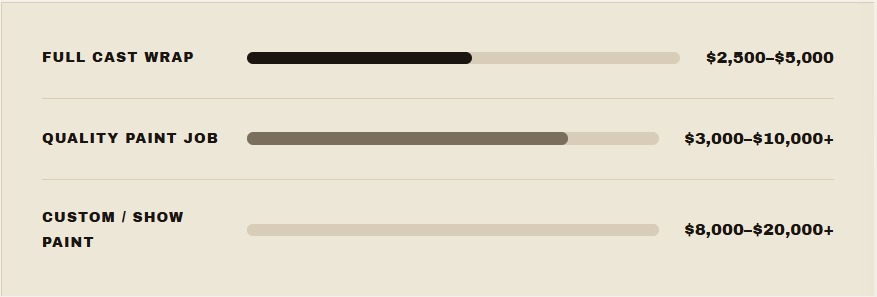
Beyond cost, the practical differences matter as much as the numbers. A wrap is reversible — the factory paint is preserved underneath and revealed at any time. Paint is permanent and affects the vehicle’s modification history at resale. A wrap takes days; a quality respray takes weeks. Wraps also offer design flexibility that paint cannot easily match: colour-shift and satin-matte finishes achieved in paint would cost multiples of wrap pricing. Paint has its own advantages — it’s integrated with the surface, has no edge-lifting risk over time, and addresses underlying damage rather than covering it.
One important clarification: we do not claim that vehicle wraps save money on insurance. Whether a wrap affects your premiums depends entirely on your insurer and policy — it is not a blanket statement, and any installer making that claim without qualifying it is overstating the case.
04 — MAINTENANCE
Keeping a Wrap Looking Its Best
A cast vinyl wrap on a well-maintained vehicle will reach its full service life without significant visual degradation. The maintenance requirements are simple, but they differ enough from standard car care to be worth understanding clearly before the wrap goes on.
|
(Insert Icon) |
Hand Wash Only — No Automated Brush Washes Rotating brush car washes are the single biggest source of premature wrap failure. Bristles catch panel edges and lift film at the seams, and the heat cycles in automated tunnels stress the adhesive layer. Hand washing with a gentle automotive soap and a soft mitt is the only recommended method. Touchless automated washes are generally acceptable — verify that no heated rinse cycles are used. |
|
(Insert Icon) |
Use Wrap-Safe Products Only — No Wax or Polish Standard car wax and polish are not compatible with vinyl wrap. Wax builds up in the textured surface of matte and satin finishes, creating a patchy gloss that is difficult to remove cleanly. Use cleaners specifically formulated for vinyl, and for spot cleaning (fuel spills, bird droppings, tree sap), use isopropyl alcohol diluted 2:1 with water, applied with a soft cloth. |
|
(Insert Icon) |
Park in Shade Where Possible Extended direct sun exposure accelerates UV degradation of the vinyl’s colour and finish. In Houston’s climate, this matters considerably more than in cooler regions. As a result, a covered car park or garage extends wrap life meaningfully compared to full-time outdoor parking. This is the variable most within an owner’s control that affects how close to rated service life the wrap actually achieves. |
|
(Insert Icon) |
Address Edge Lifts Immediately If a panel edge or seam begins to lift, even a small amount, have it resealed promptly. A lifted edge allows water to wick under the film, spreading adhesive failure across a larger area. A small edge repair done early costs very little; the same failure left to propagate can require a full panel re-wrap. |
Ready to Change Your Look?
View our wrap gallery for finish references and completed projects, or contact us to discuss a specific colour-change or commercial application. All full wraps use premium cast vinyl from 3M and Avery Dennison.
Client Testimonials
These guys did a great job on repairing/replacing the driver-side glass on my Mercedes SL550. The prices were very competitive, and they really went over the top on accommodating my weird scheduling. Truly 5-Star! Thanks guys…BTW, the shop/showroom was immaculate!
I had my car’s windows tinted here, and I’m beyond happy! The service was fast, and the tint is high quality. It really helps with glare and heat. Definitely recommending them to friends.
I don’t ever write reviews, but I wanted to make sure I shared my experience with these guys. Best price in the city, extremely quicker than everyone else estimated, and they did a great job. They even vacuumed the residue of the glass from under my seat. Would definitely recommend them!
Related Services |
|
| Paint Protection Film | Window Tinting |
FREQUENTLY ASKED QUESTIONS (FAQs)
Will a vehicle wrap damage my paint?
No, a correctly installed wrap on properly prepared paint protects the underlying surface rather than harming it. Wrapped panels are shielded from UV degradation, minor abrasions, and environmental contaminants for the duration of the wrap’s service life. When removed by a professional, wrapped areas routinely show better paint condition than adjacent unwrapped panels. The critical qualifier is paint condition before installation: wrap adhesive can lift paint that was already poorly bonded, damaged, or recently repainted with low-quality materials.
How long does a vehicle wrap last?
Cast vinyl wrap typically lasts 5 to 7 years under normal daily driving conditions, with properly garaged vehicles often reaching 10 years. Calendered vinyl, used for flat-surface commercial graphics and fleet applications, lasts 3 to 5 years. Longevity is influenced by Houston’s UV intensity, whether the vehicle is parked outdoors or garaged, and how it is maintained — hand washing versus automated brush washes being the most significant variable.
Can I wrap a leased vehicle?
Yes, and wrapping is actually ideal for leased vehicles. Because a professional wrap is fully removable, it lets you change the vehicle’s appearance without permanent alteration, which means you return at lease end without any paint modification penalty. The wrap also protects the original paint from the minor wear that accumulates over a lease term. We recommend removing the wrap 1 to 2 months before lease return to allow inspection of the paint underneath.
How long does wrap installation take?
A full vehicle wrap takes 3 to 5 business days. This accounts for vehicle preparation, panel-by-panel application including all complex curves, bumpers, mirrors, and handles, and a final quality inspection before delivery. Partial wraps — hood, roof, trunk, or selected accent panels — take 1 to 2 days, depending on scope. Rush timelines are occasionally possible but are the exception rather than the rule.
Upgrade Your Ride Today
A Plus Auto Glass installs professional vehicle wraps using premium cast vinyl from 3M and Avery Dennison. For design inspiration and project quotes, view our vehicle wraps gallery and get a quote.